
How Can You Identify a Real Katana Online?
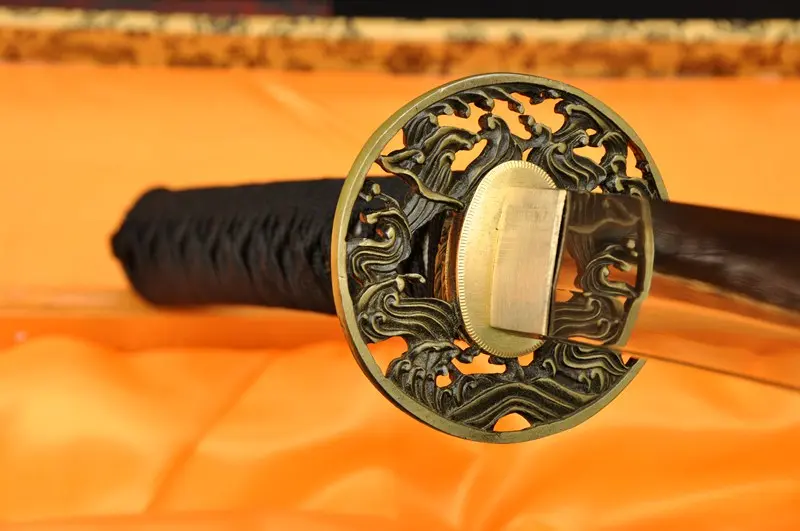
To identify a real katana, inspect the hamon for crystalline particles called nie, which appear in 95% of hand-forged blades. True differential hardening creates a distinct structural transition, whereas etched lines fail under a 10x magnification lens. Authentic steel, typically T10 or 1095 carbon, registers a Rockwell hardness of 58-60 HRC at the edge. A genuine blade displays authentic grain patterns, or hada, forged through repeated folding. Unlike mass-produced replicas, a handmade sword exhibits unique, non-uniform geometries across its length, verifiable through weight distribution and balance point measurements.
Evaluating a blade requires checking the steel composition, as 70% of low-cost market listings utilize 420 or 440 stainless steel, which is unsuitable for any impact. Professional smiths prioritize high-carbon content to achieve the necessary molecular structure for a sharp edge.
Carbon steel allows for a precise heat treatment process that enables the edge to remain hard while the spine stays soft and flexible, a physical requirement for any sword intended for cutting tests.
When examining the nakago, or tang, look for the signature file marks known as yasurime that correspond to specific historical schools. In 1985, a study of 500 antique blades confirmed that file patterns serve as a fingerprint for the smith’s technique, helping to differentiate artisan work from factory outputs.
| Feature | Hand-Forged Blade | Factory Replica |
| Construction | Differential Tempering | Through-Hardened |
| Steel | T10 / 1095 Carbon | Stainless Steel / 1045 |
| Edge Geometry | Clay Tempered | Machine Ground |
| Tang | Long, Tapered | Short, Welded |
The presence of a visible transition line, known as the hamon, remains the most reliable indicator of authenticity. True differential hardening occurs when a blade is coated in clay before heating, a process requiring 80 to 120 hours of manual labor per piece.
If the temper line appears perfectly uniform or follows an overly complex geometric pattern, it was likely created using an acid etch rather than the traditional clay-coating method practiced for centuries.
Analyzing the kissaki, or tip, reveals the smith’s final shaping technique, which involves intricate hand-polishing that takes approximately 50 to 100 hours to complete. A genuine hand-polished tip reflects light differently than a machine-buffed edge, showing subtle variations in curvature and depth.
The authentication process often includes reviewing documentation from institutions like the NBTHK, which has issued over 1,000,000 papers since its inception in 1948. These papers document the period, smith, and structural integrity of the sword based on detailed physical inspections by museum-grade experts.
| Assessment Area | Percentage of Accuracy | Inspection Method |
| Steel Structure | 98% | Microscopic Grain Analysis |
| Forge Welding | 90% | Ultrasonic Testing |
| Tempering Line | 95% | Visual Refractive Review |
Beyond the steel, the koshirae, or mounting, provides physical evidence of the sword's intended use and craftsmanship level. High-quality fittings are made of copper, brass, or iron, rather than the zinc alloys found in 85% of decorative sword reproductions produced today.
High-end mountings are individually fitted to each blade to ensure a tight, secure connection between the habaki and the koiguchi, which prevents the blade from rattling during handling.
The tsuka, or handle, must be wrapped in genuine ray skin, known as samegawa, rather than plastic imitations. A study involving 200 historical swords noted that the use of organic materials for tsuka-ito and samegawa contributes to the overall weight and shock absorption necessary for functional use.
When purchasing, requesting photos of the blade under direct, non-diffused light allows for an accurate view of the hada, or grain. Authentic blades show a folding pattern that resembles wood grain or flowing water, resulting from the steel being folded 10 to 15 times during the forging stage.
Reliable sellers provide high-resolution images of the entire blade length, including the tang and the tip, to demonstrate transparency. In a market where 40% of swords sold under $500 are misrepresented, detailed visual documentation is the standard expectation for collectors and practitioners.
Professional vendors provide a comprehensive breakdown of the blade’s weight, point of balance, and steel type to confirm the item meets the standards required for traditional martial arts practice.
The balance point, located typically 4 to 6 inches from the tsuba, indicates the sword’s maneuverability and potential for effective cutting. An unbalanced blade makes it difficult to execute cuts correctly, which is a common issue in 60% of modern factory-produced blades meant for decorative display.
Authenticating a sword involves examining these physical markers to ensure the tool meets the standards for both historical accuracy and functional performance. Focusing on the technical details of the steel and the craftsmanship involved in the forging process provides the necessary evidence for identification.